
Public Procurement Of Innovative Solutions For Improving Citizens' Access To Healthcare Through Integrated Or Personalised Approaches
HORIZON Public Procurement of Innovative Solutions
Basic Information
- Identifier
- HORIZON-HLTH-2026-01-CARE-01
- Programme
- Cluster 1 - Health (Single stage - 2026)
- Programme Period
- 2021 - 2027
- Status
- Closed (31094503)
- Opening Date
- February 10, 2026
- Deadline
- April 16, 2026
- Deadline Model
- single-stage
- Budget
- €9,800,000
- Min Grant Amount
- €3,000,000
- Max Grant Amount
- €4,000,000
- Expected Number of Grants
- 3
- Keywords
- HORIZON-HLTH-2026-01-CARE-01HORIZON-HLTH-2026-01Child healthClinical managementElectronic patient filesHealth careHealth dataHealth management systemsHealth services, health care researchHealthcare systemHomecareIntegrated careMedical servicePatient carePersonalised care solutionsPersonalised preventionPersonalised servicesPublic health policiesQuality of health careQuality-of-lifeRare diseasesScreening programme
Description
This topic aims at supporting activities that are enabling or contributing to one or several expected impacts of destination “Ensuring equal access to innovative, sustainable, and high-quality healthcare”. To that end, proposals under this topic should aim to deliver results that are directed at, tailored towards and contributing to several of the following expected outcomes:
- Patients and their carers, health authorities and health professionals will benefit from the deployment of innovative solutions, designed around actual clinical needs, that facilitate identification, integration or coordination of care, allowing for personalised, more accessible, inclusive and higher quality of health and care.
- Patients will benefit from personalised approaches, improved care experiences and health outcomes or are more engaged in their care and better equipped to make informed decisions on their health, in collaboration with health professionals.
- Health professionals will be better equipped with, and thus benefit from, improved means for diagnosis, care delivery and/or coordination, with multi-disciplinary approaches and closer patient engagement, thanks to new technologies.
- Health systems will improve their accessibility, coordination mechanisms, effectiveness, inclusivity and resilience, thanks to innovative solutions, with a better use of resources, thus stimulating organisational innovation, cultural transformation within hospitals, and European-level collaboration.
Public Procurement of Innovative Solutions (PPI)[1] can boost the wider market uptake of high impact innovations in health systems, while enhancing the tools available to providers and improving access to healthcare for citizens. This supports enhancement of social rights[2] and the European economic competitiveness by providing business opportunities and thus incentives to innovate. By acting as early adopters of innovative solutions, procurers can open up new growth markets for the European industry and small and medium-sized enterprises (SMEs)[3]. Joint/collaborative demand-driven initiatives can help create economies of scale and facilitate the wider adoption of innovations in the health sector for the benefits of patients in need.
PPI actions target consortia of procurers with a similar need that want to procure together the deployment of innovative solutions for supporting integration of care or diagnostics for personalised medicine. This topic does not provide direct funding to developers, industry or research organisations to perform research and development. They will be able to respond to the call for tenders launched by consortia of procurers funded under this topic.
Proposals should specify which segment of the patient population they target, the specific organisational and/or technological innovations to be procured, and why the proposed innovative solutions would be fit for purpose adhering, when relevant, to the principles of integrated care[4] or personalised medicine[5].
Examples of target groups that could be covered by this action are: patients at risk of vulnerability such as children and older/frail people with complex needs for health and social care; people with multi-morbidities or non-communicable diseases of high burden; people with both physical and mental health conditions; people living with rare diseases or cancer; persons with disabilities; other groups of patients in need of highly integrated and coordinated care. Proposals should pay attention to how gender and intersectional factors (e.g. caregiving responsibilities, work-related health disparities etc.) affect healthcare access and outcomes.
Proposals should demonstrate, with qualitative and quantitative indicators, how they contribute to the above expected outcomes, clearly describe the application of the principles of integrated care and personalised medicine in the deployed solutions, when relevant. This would also include embedding the innovation in the existing health systems, addressing gaps and avoiding overlaps, while fostering change management across organisations, professions and sectors.
Solutions envisaged within this action are for example digital solutions[6], including Artificial Intelligence (AI) elements, to facilitate delivery of integrated care across hospitals, primary care, Long-Term Care (LTC) facilities and home settings, or technologies that improve routine diagnosis and lead to personalised medicine approach with the health and care setting.
The actions should target first deployment of innovative solutions across different health and care jurisdictions in Europe by engaging public and/or private procurers from each participating country (at national, regional or local level) that have deployment responsibilities and budget control in the provision of health and care services. Procurers will specify, purchase and deploy solutions addressing their relevant and shared unmet needs, while engaging together in a supply and demand side dialogue. Proposals should be based on clearly identified user needs and well-structured deployment plans, explaining how the procurement of the innovative solutions will contribute to the expected outcomes and improve current practice. In addition, cost-effectiveness analyses as well as estimates of the wider economic impact are highly desirable.
Activities covered should include cooperation with policymakers to reinforce national/regional policy frameworks and policies, to raise awareness, for technical assistance and/or capacity building beyond the project, to mainstream PPI implementation and remove obstacles to introduce innovative solutions to the market.
A wide variety of settings are potentially relevant for the implementation of such innovative solutions, for example primary healthcare settings, hospitals, specialised centres, long-term care facilities and home settings. The involvement of end-users (including for analysing the impact of the deployed solutions on health professionals and patients across the care continuum) and the use of cross-sectorial approaches are necessary. When relevant, linkage with ongoing work at national level for the implementation of the European Health Data Space (EHDS)[7] is encouraged. Proposals are encouraged to consider, where relevant, the data, expertise and services offered by European research infrastructures[8] in the health domain.
Transfer and adaptation of solutions and/or interventions from other sectors to healthcare is possible. The topic is open both to innovations bringing improvements mainly based on one specific solution/technology field, as well as to innovations delivering end-to-end solutions that need combinations of different types of innovative elements. Proposals are strongly encouraged to build upon past work and build synergies with ongoing EU-funded initiatives, for example the Joint Actions JADECARE[9] and Xt-EHR[10], the project MyHealth@Myhands[11] and the three co-funded European Partnerships on Transforming Health and Care Systems[12], on Personalised Medicine[13] and on Rare Diseases[14], as well as with actions supported under the Technical Support Instrument and the Cohesion Policy Funds.
[1] https://research-and-innovation.ec.europa.eu/strategy/support-policy-making/shaping-eu-research-and-innovation-policy/new-european-innovation-agenda/innovation-procurement/horizon-europe-funding-pcp-and-ppi_en For PPI executed by a group of procurers, the lead procurer should coordinate the preparation and implementation of one joint or several coordinated public procurements of innovative solutions, based on common specifications defined jointly by the buyers’ group. Each PPI should focus on one concrete need identified as a common challenge that requires the deployment of innovative solutions. Projects that aim to implement a PPI should contain a preparation and execution stage.
[2] European Pillar of Social Rights: https://employment-social-affairs.ec.europa.eu/european-pillar-social-rights-20-principles_en
[3] https://eur-lex.europa.eu/legal-content/EN/TXT/PDF/?uri=CELEX:32003H0361
[4] https://integratedcarefoundation.org/nine-pillars-of-integrated-care See also diagram: https://cordis.europa.eu/docs/results/h2020/634/634288_PS/001-eur-selfie2020-infographic-implementation.png and relevant corresponding article: https://www.sciencedirect.com/science/article/pii/S0277953621000605?via%3Dihub
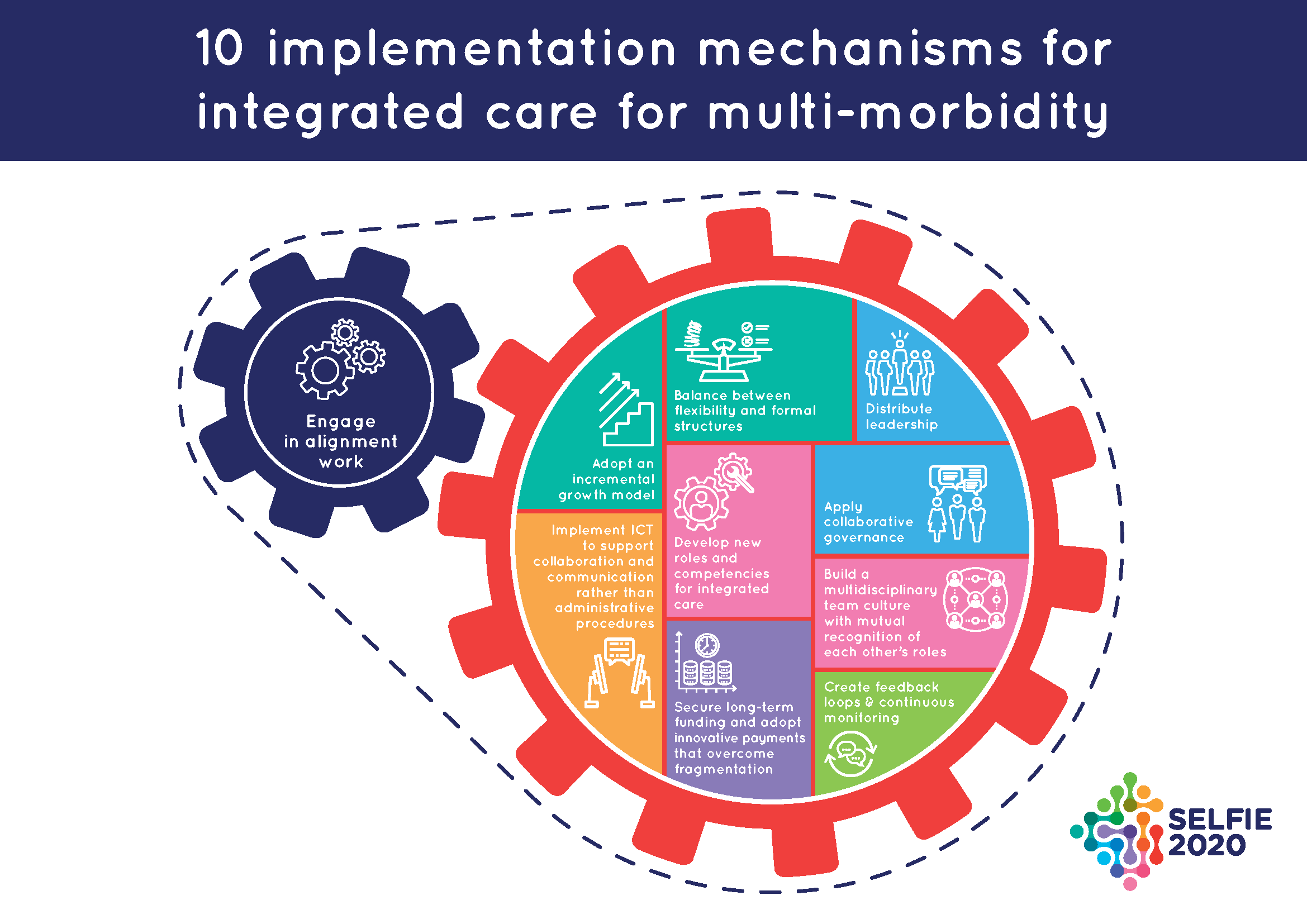
[5] https://health.ec.europa.eu/medicinal-products/personalised-medicine_en
[6] For digital technologies concerned, appropriate measures for the security of the communications between the intended parties should be considered, in particular based on the use of post-quantum cryptography.
[8] The catalogue of European Strategy Forum on Research Infrastructures (ESFRI) research infrastructures portfolio can be browsed on the ESFRI website: https://ri-portfolio.esfri.eu
[11] https://myhealthmyhands.eu
[12] https://cordis.europa.eu/project/id/101095654, https://www.thcspartnership.eu
[13] https://cordis.europa.eu/project/id/101137129, https://www.eppermed.eu
[14] https://cordis.europa.eu/project/id/101156595, https://erdera.org
Destination & Scope
Topics under this destination are directed towards the Key Strategic Orientation 2 “The Digital transition” and Key Strategic Orientation 3 “A more resilient, competitive, inclusive, and democratic Europe” of Horizon Europe’s strategic plan 2025-2027[1].
Research and Innovation supported under this destination should contribute to the following expected impact, set out in the strategic plan impact summary for the Health Cluster: “healthcare systems provide equal access to innovative, sustainable and high-quality healthcare thanks to the development and uptake of safe, cost-effective and people-centred solutions. This is to be accompanied by management models focusing on population health, health systems resilience, and health equity and patient safety, and also improved evidence-informed health policies”.
Health systems are affected by limitations in sustainability and resilience, and face inequalities in access to high-quality and acceptable healthcare services. Health systems need to become more effective, efficient, accessible, fiscally and environmentally sustainable, and resilient in order to cope with public health emergencies, support healthcare workforce, adapt to environmental challenges like climate change, and contribute to social justice and cohesion. The transformation and modernisation of health systems will remain an important challenge for many years to come, but it also holds a significant opportunity to generate evidence, leverage existing and emerging solutions, implement digital and data-driven innovation and develop more accessible, cost-effective, flexible and equitable health systems.
Research and Innovation under this destination should aim to support the transformation of healthcare systems ensuring fair and inclusive access to high-quality, acceptable, sustainable healthcare for all. Funded activities will focus on developing innovative, practical, scalable and financially sound solutions, that improve governance, provide decision-makers with new evidence, tools, and technologies, and ensure long-term fiscal, environmental and climate sustainability. A patient-centred approach should be adopted, improving patients’ health outcomes, empowering patients, fostering active dialogue among stakeholders (e.g. citizens, patients, caregivers, healthcare providers), and encouraging social innovation. Research and Innovation actions should prioritise supporting healthcare professionals and providers, ensuring they have the resources and tools needed to meet the diverse needs and preferences of citizens. Research and Innovation should facilitate scalable and transferable solutions that can be applied across different healthcare systems and national, regional, and local contexts. This should include generating knowledge that supports the transfer of solutions between countries, including measures to address health inequalities. Research and Innovation activities under this destination will contribute to, among other things, the European Care Strategy[2], the digital transformation of health and care in the EU[3], the European Pillar of Social Rights[4], [5], the EU strategy on adaptation to climate[6], the Pharmaceutical Strategy for Europe[7], the European Health Data Space (EHDS)[8], the Strategy for European Life Sciences[9] and the European Green Deal[10]. They align with the Commission's Political Guidelines for 2024-2029[11], which include efforts to complete the European Health Union by promoting access for all to high-quality and affordable healthcare, fostering a resilient and innovative health ecosystem, and strengthening the competitiveness of the European Union[12].
In this Work Programme part, the focus of this destination will be on public procurement of innovative solutions for integrated or personalised care, aiming to develop and test solutions that improve access to and provision of healthcare. It will also support personalised medicine approaches to reduce adverse drug reactions due to the administration of multiple medication, and research to identify and address low-value care in health and care systems, improving healthcare outcomes, efficiency, and fiscal sustainability.
To increase the impact of EU investments under Horizon Europe, the Commission encourages and supports cooperation among EU-funded projects to foster cross-fertilisation and synergies. This includes networking, joint activities such as workshops, knowledge exchange, best practices development, and joint communication activities. Synergies can be explored not only between projects funded under the same topic, but also between projects funded under other topics, Clusters or Pillars of Horizon Europe. For instance, collaborations may arise between projects related to European health research infrastructures (under Pillar I), the EIC[13] strategic challenges on health (under Pillar III), or across the Clusters of Pillar II such as Cluster “Culture, Creativity and Inclusive Society” focusing e.g. on the long-term sustainability of public health systems (e.g. economic and organisational models and measures for cost effectiveness and fiscal sustainability), or Cluster “Digital, Industry and Space” focusing on the digitalisation of the health sector, including the use of Artificial Intelligence (AI).
The Commission aims to foster synergies between Horizon Europe and other EU programmes. To this end, applicants are encouraged to explore the funding opportunities available through the EU4Health Programme (2021-2027)[14], the EU's public health programme, as a means of capitalising on potential collaborations and maximising impact.
Expected impacts:
Proposals for topics under this destination should set out a credible pathway to contributing to ensuring access to innovative, sustainable, inclusive and high-quality healthcare, and more specifically to one or several of the following impacts:
- Health and social care services and systems have improved governance mechanisms, making them more effective, efficient, accessible, resilient, trusted and sustainable, from fiscal, organisational and environmental perspectives. This includes shifting from hospital-centred to community-based, people-centred and integrated healthcare structures, embedding technological innovations and prioritising health promotion and disease prevention and management.
- Healthcare providers are trained and equipped with the skills and competences needed for future healthcare systems that are modernised, digitally transformed and equipped with safe innovative tools, technologies and digital solutions for healthcare. This will involve better patient management, improved patient engagement and health outcomes, reorganised workflows, and improved resource management.
- Citizens play a key role in managing their own healthcare, informal carers (including unpaid carers) are fully supported (e.g. by preventing overburdening and economic stress) and the specific needs of groups in a vulnerable situation are recognised and addressed. This includes improved access to healthcare services, financial risk protection, timely access to quality healthcare services including essential medicines and vaccines.
- Health policy and systems adopt a holistic approach -considering individuals, communities, organisations, society- in evaluating health outcomes, public health interventions, healthcare organisation, and decision-making. They benefit from evidence based, scalable and transferable healthcare solutions (e.g. between countries and healthcare settings) including for addressing health inequalities and ensuring environmental and climate sustainability in the health sector.
The actions resulting from the topics under this destination will also create strong opportunities for synergies with actions stemming from the EU4Health programme, in particular contributing to the goals under the general objective “protecting people in the Union from serious cross-border threats to health” and specific objective 4 “to strengthen health systems, their resilience and resource efficiency”.
Legal entities established in China are not eligible to participate in both Research and Innovation Actions (RIAs) and Innovation Actions (IAs) falling under this destination. For additional information please see “Restrictions on the participation of legal entities established in China” found in the Annex B of the General Annexes of this Work Programme.
The protection of European communication networks has been identified as an important security interest of the Union and its Member States. Entities that are assessed as high-risk suppliers[15] of mobile network communication equipment (and any entities they own or control) are not eligible to participate as beneficiaries, affiliated entities and associated partners to topics identified as “subject to restrictions for the protection of European communication networks”. Please refer to the Annex B of the General Annexes of this Work Programme for further details.
[2] Communication from the European Commission on the European care strategy, COM(2022) 440, 7.9.2022
[3] Communication from the European Commission on enabling the digital transformation of health and care in the Digital Single Market; empowering citizens and building a healthier society, COM(2018) 233, 25.4.2018
[5] Commission Communication on Artificial Intelligence for Europe; COM(2018) 237 final: https://digital-strategy.ec.europa.eu/en/policies/european-approach-artificial-intelligence; https://eur-lex.europa.eu/legal-content/EN/TXT/?uri=COM:2018:237:FIN
[6] https://climate.ec.europa.eu/eu-action/adaptation-climate-change/eu-adaptation-strategy_e
[7] https://health.ec.europa.eu/medicinal-products/pharmaceutical-strategy-europe_en
[9] https://research-and-innovation.ec.europa.eu/strategy/strategy-research-and-innovation/jobs-and-economy/towards-strategy-european-life-sciences_en; https://ec.europa.eu/commission/presscorner/detail/en/ip_25_1686
[10] https://commission.europa.eu/strategy-and-policy/priorities-2019-2024/european-green-deal_en
[11] https://commission.europa.eu/about/commission-2024-2029_en
[12] https://commission.europa.eu/topics/eu-competitiveness_en
[14] https://commission.europa.eu/funding-tenders/find-funding/eu-funding-programmes/eu4health_en
[15] Entities assessed as “high-risk suppliers”, are currently set out in the second report on Member States’ progress in implementing the EU toolbox on 5G cybersecurity of 2023 (NIS Cooperation Group, Second report on Member States’ progress in implementing the EU Toolbox on 5G Cybersecurity, June 2023) and the related Communication on the implementation of the 5G cybersecurity toolbox of 2023 (Communication from the Commission: Implementation of the 5G cybersecurity Toolbox, Brussels, 15.6.2023 C(2023) 4049 final).
Eligibility & Conditions
General conditions
1. Admissibility Conditions, proposal page limit and layout
2. Eligible Countries
Eligible countries are described in Annex B of the Work Programme General Annexes.
A number of non-EU/non-Associated Countries that are not automatically eligible for funding have made specific provisions for making funding available for their participants in Horizon Europe projects. See the information in the Horizon Europe Programme Guide.
3. Other Eligibility Conditions
In recognition of the opening of the US National Institutes of Health’s programmes to European researchers, any legal entity established in the United States of America is eligible to receive Union funding.
If projects use satellite-based earth observation, positioning, navigation and/or related timing data and services, beneficiaries must make use of Copernicus and/or Galileo/EGNOS (other data and services may additionally be used).
The specific conditions for actions with PCP/PPI procurements in section H of the General Annexes apply to grants funded under this topic.
Subject to restrictions for the protection of European communication networks.
Other eligibility conditions are described in Annex B of the Work Programme General Annexes.
4. Financial and operational capacity and exclusion
Financial and operational capacity and exclusion are described in Annex C of the Work Programme General Annexes.
5a. Evaluation and award: Award criteria, scoring and thresholds
Award criteria, scoring and thresholds are described in Annex D of the Work Programme General Annexes.
5b. Evaluation and award: Submission and evaluation processes
Submission and evaluation processes are described in Annex F of the Work Programme General Annexes and the Online Manual.
5c. Evaluation and award: Indicative timeline for evaluation and grant agreement
Indicative timeline for evaluation and grant agreement are described in Annex F of the Work Programme General Annexes.
6. Legal and financial set-up of the grants
Beneficiaries may provide financial support to third parties to ensure the deployment and impact of the project outcomes. The support to third parties can only be provided in the form of grants. The maximum amount to be granted to each third party is EUR 60 000.
The specific conditions are described in General Annex H.
PPI procurement costs are eligible.
The granting authority may, up to 4 years after the end of the action, object to a transfer of ownership or to the exclusive licensing of results, as set out in the specific provision of Annex 5.
Legal and financial set-up of the grants are described in Annex G of the Work Programme General Annexes.
Specific conditions
Specific conditions are described in the specific topic of the Work Programme.
Application and evaluation forms and additional documents:
Application and evaluation form templates
Standard application form (HE PPI) - the application form specific to this call is available in the Submission System
Standard evaluation form (HE PCP PPI) - will be used with the necessary adaptations
Guidance
Model Grant Agreement (MGA)
Call-specific instructions
Additional documents
HE Main Work Programme 2026-2027 – 1. General Introduction
HE Main Work Programme 2026-2027 – 4. Health
HE Main Work Programme 2026-2027 – 15. General Annexes
HE Framework Programme 2021/695
HE Specific Programme Decision 2021/764
EU Financial Regulation 2024/2509
Decision authorising the use of lump sum contributions under the Horizon Europe Programme
Rules for Legal Entity Validation, LEAR Appointment and Financial Capacity Assessment
EU Grants AGA — Annotated Model Grant Agreement
Funding & Tenders Portal Online Manual
Frequently Asked Questions About Public Procurement Of Innovative Solutions For Improving Citizens' Access To Healthcare Through Integrated Or Personalised Approaches
Support & Resources
Online Manual is your guide on the procedures from proposal submission to managing your grant.
Horizon Europe Programme Guide contains the detailed guidance to the structure, budget and political priorities of Horizon Europe.
Funding & Tenders Portal FAQ – find the answers to most frequently asked questions on submission of proposals, evaluation and grant management.
Research Enquiry Service – ask questions about any aspect of European research in general and the EU Research Framework Programmes in particular.
National Contact Points (NCPs) – get guidance, practical information and assistance on participation in Horizon Europe. There are also NCPs in many non-EU and non-associated countries (‘third-countries’).
Enterprise Europe Network – contact your EEN national contact for advice to businesses with special focus on SMEs. The support includes guidance on the EU research funding.
IT Helpdesk – contact the Funding & Tenders Portal IT helpdesk for questions such as forgotten passwords, access rights and roles, technical aspects of submission of proposals, etc.
European IPR Helpdesk assists you on intellectual property issues.
CEN-CENELEC Research Helpdesk and ETSI Research Helpdesk – the European Standards Organisations advise you how to tackle standardisation in your project proposal.
The European Charter for Researchers and the Code of Conduct for their recruitment – consult the general principles and requirements specifying the roles, responsibilities and entitlements of researchers, employers and funders of researchers.
Partner Search help you find a partner organisation for your proposal.
Latest Updates
No updates available.